Reading Violets in Old Portraits: Key Points
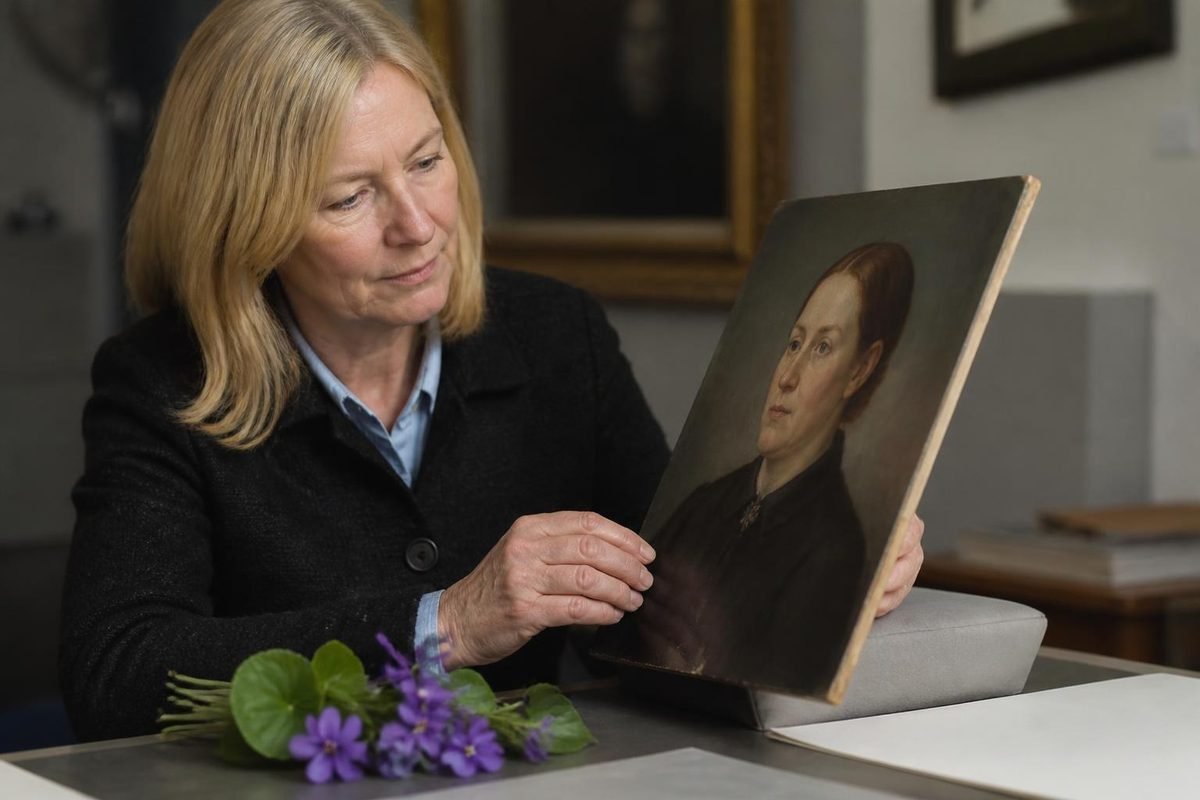
Violets in historical portraits may point to modesty, humility, fidelity, or affection. Their meaning is never certain from the flower alone; the sitter, the artist, and other parts of the image all matter.
Violets as signs of modesty
Because violets grow near the ground and their small blooms can be partly concealed by leaves, writers and artists have connected them with modesty. In a portrait, a violet held in someone’s hand or pinned to their clothing may encourage viewers to read the sitter as humble or reserved.
This interpretation may seem more likely if the sitter’s pose and clothing also suggest restraint. Still, the flower might simply have been chosen because it was pleasing or easy to find. Without much information about the portrait, it can be hard to tell which explanation fits.
Fidelity, love, and personal ties
Violets have also stood for faithfulness and lasting affection. A small cluster of them might hint at a close bond, particularly in a portrait painted for a marriage or to mark a relationship. But the flowers cannot establish who the sitter cared for, or show that the portrait was given as a gift.
Other clues can offer firmer ground for interpretation. A ring, written inscription, or portrait of a companion may tell historians more than the violets do. Records about the sitter or the reason for the painting can also help, though such details have not survived for many portraits.
Religious associations and details to notice
Christian art has linked violets with the humility of the Virgin Mary. In a devotional image, the flowers may therefore carry a religious significance. That reading is more persuasive in a portrait if religious objects or a devotional setting appear nearby.
It helps to examine the whole image before assigning a meaning:
- Position: A flower displayed clearly in the sitter’s hand may draw more notice than one tucked into an ornamental border.
- Nearby details: Other flowers, objects, or inscriptions may strengthen a symbolic reading, or make it less straightforward.
- Flower identification: Artists may paint flowers in a stylized way, and small reproductions can make them difficult to recognize.
- Historical setting: The portrait’s date, location, and known purpose can help narrow down possible meanings.
Purple color by itself does not prove that a flower is a violet. Many kinds of flowers are purple, and pigments may alter as a painting ages. A museum’s description or a close view of the original artwork can provide a helpful starting point.
Common questions about painted violets
Did violets always stand for modesty?
No. Modesty is a familiar association, but violets might suggest other things or simply add beauty to the image. It is sensible to keep some uncertainty in mind.
Can a violet tell us who paid for a portrait?
No, not on its own. The flower may contribute a clue, but identifying a patron generally calls for other evidence, such as documents, inscriptions, or a recorded ownership history.
On the same subject: how a florist keeps customers